Learning to Surf as a Woman: The Complete Beginner's Guide
Quick Answer: Yes, you can learn to surf as an adult woman with zero athletic background — book a proper lesson on a big soft-top board, and most beginners are standing up (however briefly) within the first hour. Two weeks of simple prep for your shoulders, back, and core will make that first session go dramatically smoother.
Every summer, thousands of women stand on a beach watching surfers glide by and think the same quiet thought: I wish I could do that. Here’s the secret the lineup doesn’t advertise: you can, at basically any age, with no athletic résumé required. Surfing has one of the kindest learning curves in all of sports — and one of the deepest ceilings, too.
What Actually Happens During Your First Surf Lesson?
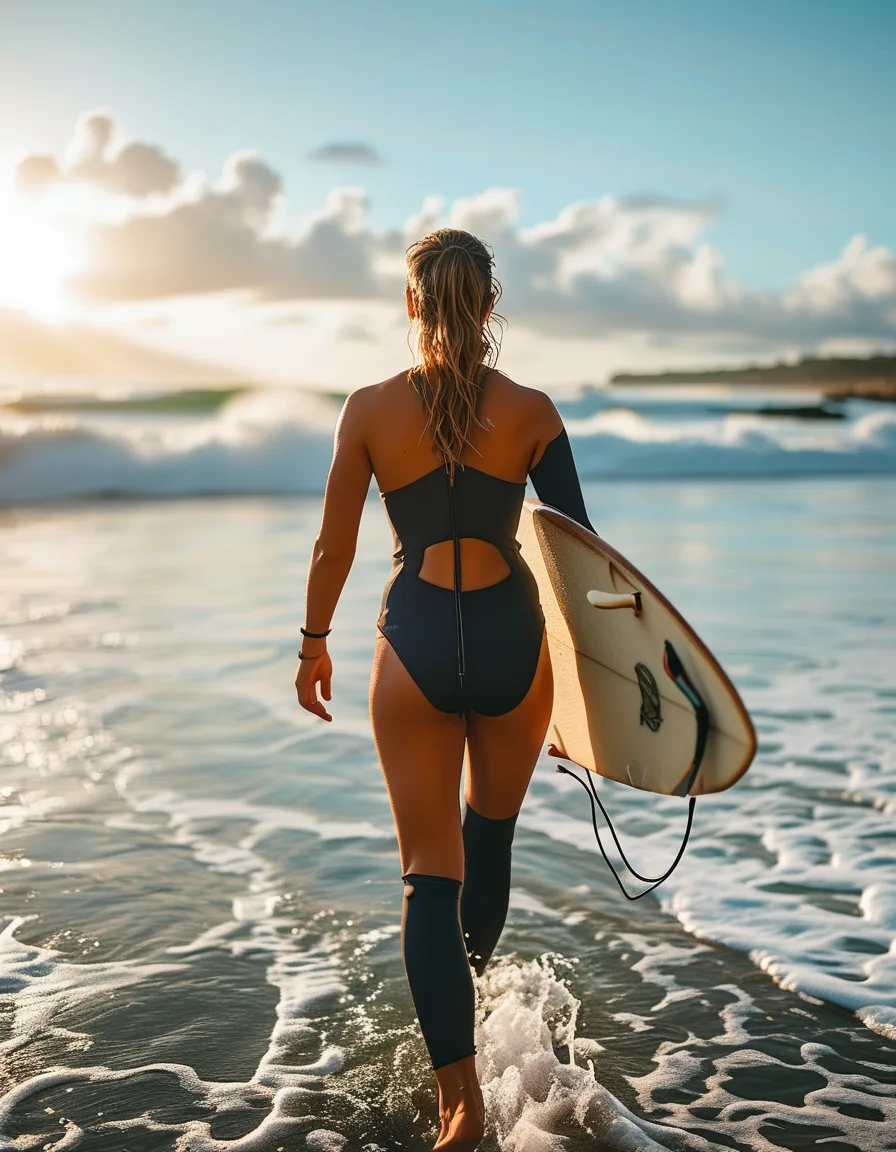
Book an actual lesson — don’t try to wing this one on your own. A good instructor starts you on a huge, soft foam board in waist-deep whitewater, which is far more forgiving than it sounds. Most beginners pop up to their feet within the first hour, even if it’s just for a second or two.
Here’s roughly what a 90-minute lesson looks like:
- About 70% of the time goes to paddling technique and positioning on the board
- The remaining 30% is glorious, splashy chaos — and that’s completely normal
- Afterward: expect “noodle arms,” a huge grin, and an urge to immediately book another one
That first moment a wave takes over and pushes you toward shore is the hook. It never really dulls, even for surfers who’ve been at it for decades.
How Should You Train for Surfing Before You Even Paddle Out?
Surfing is roughly 90% paddling, and paddling is almost entirely shoulders, back, and core. The good news: two weeks of simple prep can transform your first few sessions.
Try building this into your routine before your lesson:
- Swim laps or do band rows a few times a week for paddling endurance
- Practice burpee-style pop-ups on your living room floor — chest down, snap up into a low crouch
- Hold planks to build the core stability that keeps you balanced on the board
Here’s the cheat code most beginners skip: being able to do ten smooth, controlled pop-ups on dry land roughly doubles how long you can actually stand up once you’re in the water.

What Gear Do You Actually Need as a Beginner?
Rent for your first five sessions, minimum. There’s no reason to buy anything before you know what you like. When you’re finally ready to purchase, beginners want a soft-top board somewhere in the 8-to-9-foot range — bigger boards catch waves more easily, and catching waves is genuinely how you learn.
A few more gear basics:
- Wear a snug rash guard plus surf leggings or a swimsuit built to survive tumbling (ask yourself: could this handle a washing machine? because it’s about to be in one)
- In cooler water, a well-fitting wetsuit changes the entire experience from miserable to enjoyable
- Keep your leash attached at all times, and use reef-safe sunscreen every single session
What Are the Unwritten Rules of the Lineup?
Surf etiquette isn’t written down anywhere obvious, but breaking it fast makes you unpopular with everyone else in the water. The basics for beginners:
- Stay in the whitewater zone, away from more experienced surfers riding unbroken waves.
- Never paddle for a wave someone closer to the peak is already riding — that wave belongs to them.
- Hold onto your board. A loose board is basically a missile aimed at whoever’s behind you.
- Apologize with a wave and a smile when you mess up — and you will mess up, probably a lot at first.
Before you even paddle out, watch the ocean for about ten minutes. Notice where the waves are breaking, where the calmer channel is, and where the other surfers are clustering. The ocean rewards students and humbles tourists pretty quickly.
Myth vs. Fact: Women and Beginner Surfing
Myth: You need to be young, athletic, or “sporty” to start surfing. Fact: Women of all ages and fitness levels take up surfing every year, and the sport’s learning curve is specifically kind to true beginners on the right board.
Myth: One bad first lesson means surfing “isn’t for you.” Fact: Almost everyone’s first session includes a lot of falling, swallowed seawater, and tired arms — that’s just what learning looks like, not a sign you should quit.
Myth: You need your own gear to get started. Fact: Renting for your first several sessions is not only fine, it’s smarter, since your ideal board size and style will become obvious only after you’ve actually surfed a few times.
Frequently Asked Questions
How long does it take to learn to surf as a beginner?
Most beginners can stand up briefly during their very first lesson, but comfortably catching and riding a “green,” unbroken wave typically takes anywhere from five to fifteen sessions. Progress varies a lot person to person, and that’s completely normal.
What size surfboard is best for a beginner woman?
An 8-to-9-foot soft-top board is the standard beginner recommendation, regardless of gender, because the extra length and volume make waves much easier to catch. You can size down as your paddling and balance improve over time.
Do you need to be strong or in great shape to start surfing?
No, but building some baseline shoulder, back, and core strength beforehand makes your early sessions noticeably less exhausting. Two weeks of simple prep like planks, band rows, and practice pop-ups goes a long way before your first real lesson.
TL;DR:
- Book an actual lesson on a big soft-top board — most beginners stand up within the first hour
- Surfing is about 90% paddling, so two weeks of shoulder, back, and core prep pays off fast
- Rent your gear for your first five sessions before buying anything
- Learn the basic lineup etiquette: stay in the whitewater, don’t drop in, hold your board, apologize when you mess up
- Progress is personal — your first real wave might take five sessions or fifteen, and either way it’s worth it
Keep Reading
This article is for general informational and styling purposes only. Fit, sizing, and product availability may vary.