What Actually Matters in Your First Year of Surfing (A Realistic Guide)
Quick Answer: In your first year of surfing, water fitness and paddle endurance matter more than board choice, reading ocean conditions matters more than technique drills, and consistency (frequency of sessions) matters more than session length — most beginner content over-indexes on gear and under-indexes on the physical and situational-awareness fundamentals that actually predict how fast someone progresses.
A lot of beginner surf guides start and end with ‘get a soft-top longboard and take a lesson.’ That’s not wrong, but it’s a small fraction of what actually determines whether someone is comfortably catching waves on their own by month six or still struggling at month twelve. Here’s the fuller picture.
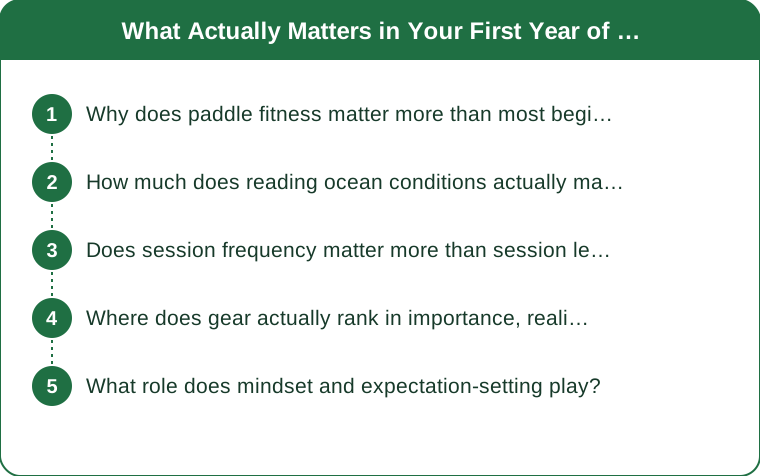
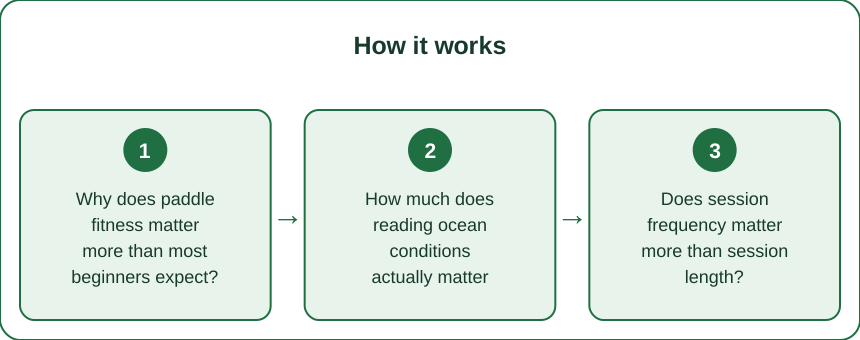
Why does paddle fitness matter more than most beginners expect?
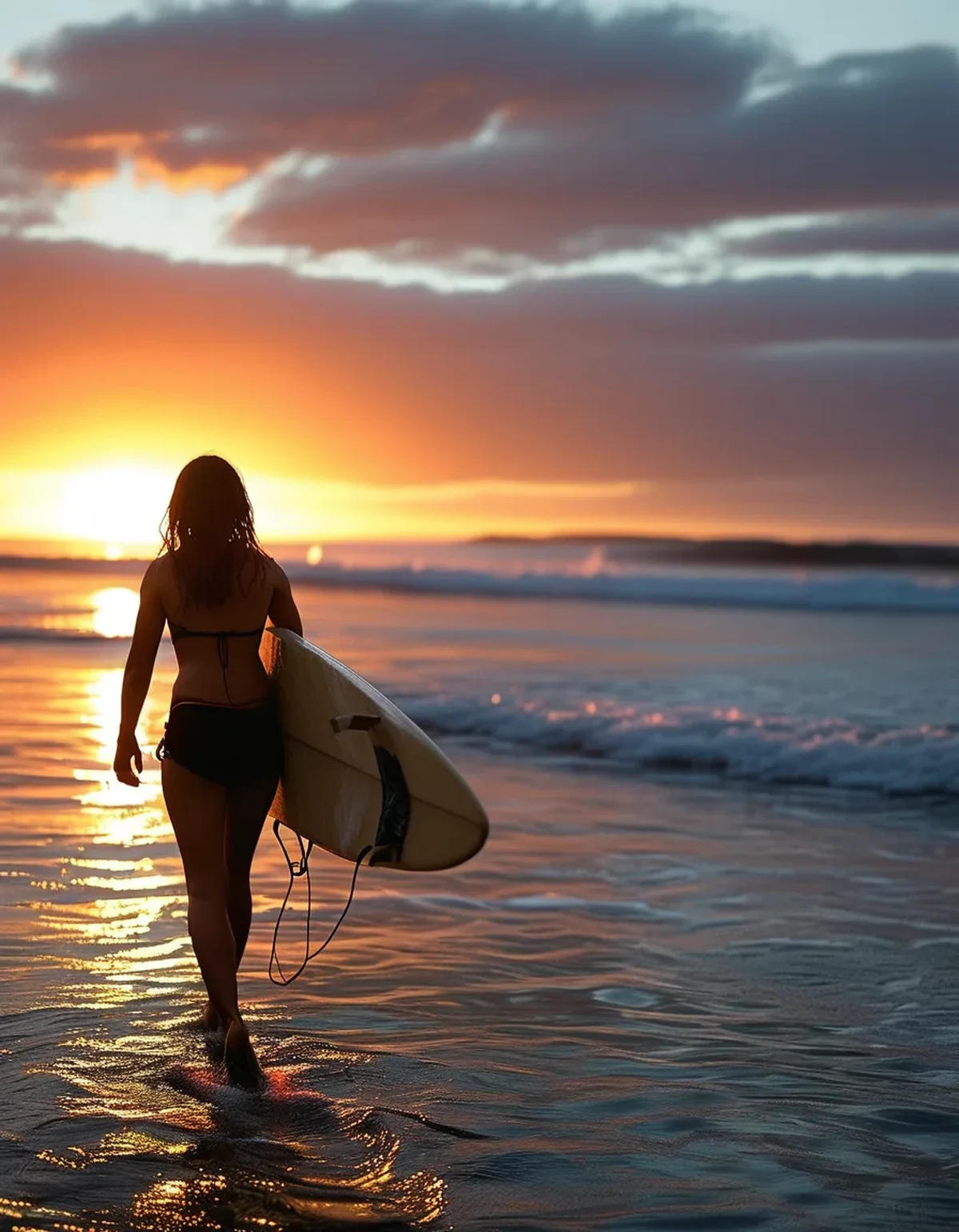
Surfing is overwhelmingly paddling, not standing — a typical session might involve 60-90 minutes of paddling for every few minutes actually spent riding a wave. Beginners consistently underestimate this ratio, which is why exhaustion, not lack of skill, is often the real reason a first or second session feels discouraging.
Building basic paddle endurance before or alongside early lessons — even just swimming freestyle laps a few times a week — measurably speeds up how much usable practice time you get per session, since a tired paddler catches fewer waves regardless of technique. This single fitness factor is arguably the highest-leverage thing a beginner can do off the water, and it’s rarely mentioned in gear-focused beginner guides.
How much does reading ocean conditions actually matter early on?
More than most technique advice suggests. A beginner who can identify a rip current, read where waves are breaking cleanly versus closing out, and judge tide and wind conditions will progress faster on genuinely easier, safer waves than a beginner with slightly better pop-up technique who’s fighting the wrong conditions every session.
This is knowledge, not athleticism — it can be learned from a good instructor, local surf reports, or even careful observation from the beach before paddling out, and it compounds every single session rather than being a one-time skill to check off.
Does session frequency matter more than session length?
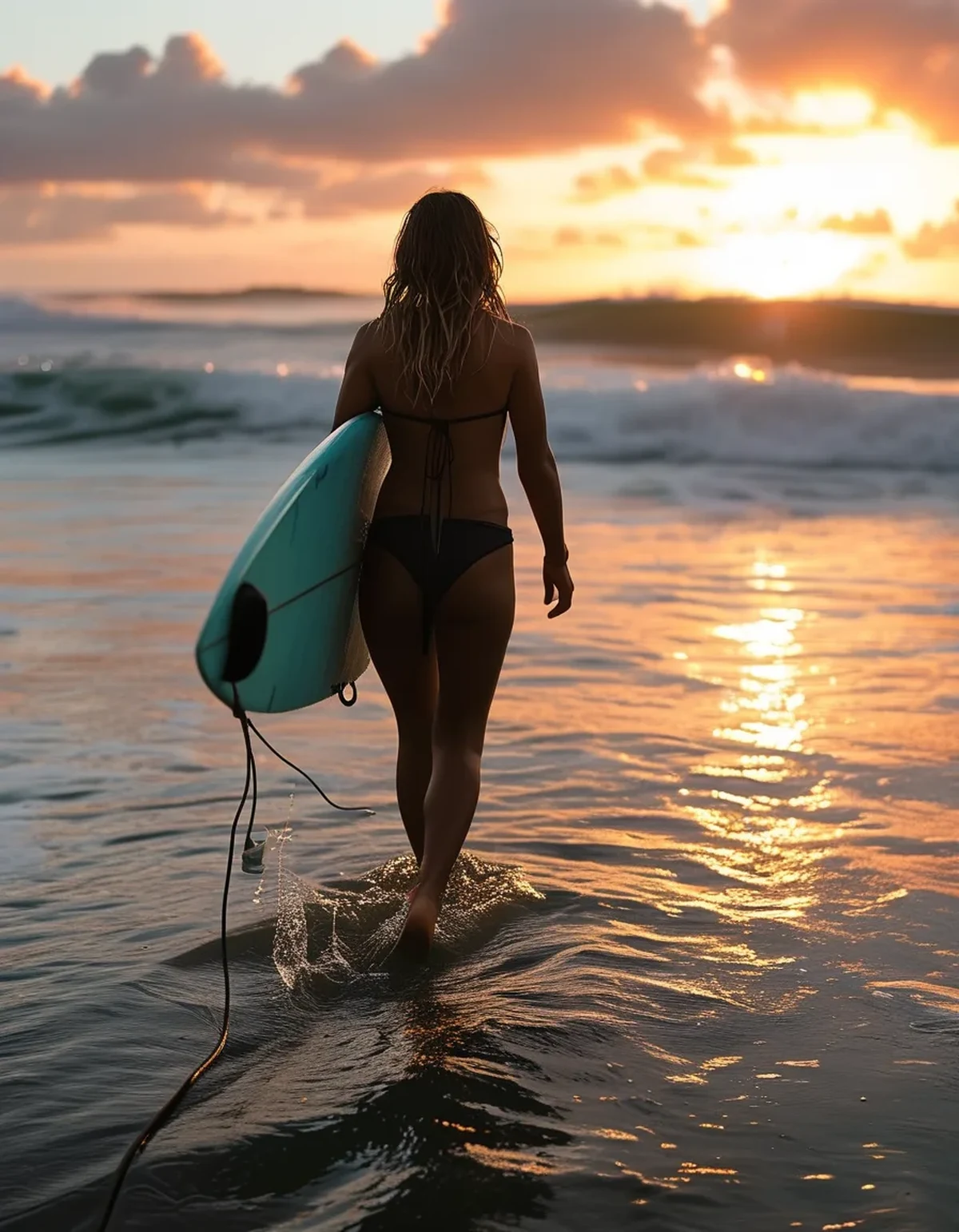
Generally yes, especially in the first several months. Three 45-minute sessions a week build skill faster than one 3-hour session, because surfing skill — like most motor skills — responds better to frequent, moderate-intensity practice than to occasional long sessions, and shorter sessions also reduce the fatigue-driven bad habits (sloppy pop-ups, poor judgment on wave selection) that creep in during hour three of a single long session.
This also has a practical upside: shorter, more frequent sessions are easier to actually fit into a regular schedule than blocking out large chunks of time, which means consistency — the single biggest driver of first-year progress — becomes more realistic to maintain.
Where does gear actually rank in importance, realistically?
Below fitness, conditions-reading, and consistency, though it’s not irrelevant. The main gear decision that matters in year one is board volume and length appropriate to your current skill level, not brand or price point — a board that’s too small or too low-volume for a true beginner makes every other factor (fitness, conditions, technique) harder to develop, because you’re spending energy fighting an unstable board instead of building actual skill.
A soft-top longboard with generous volume, even if it looks unglamorous, is standard beginner advice for good reason — it’s the gear choice that gets out of the way of the more important factors rather than competing with them.
What role does mindset and expectation-setting play?
A significant one that’s easy to underrate. Most people expect visible, steady progress and instead experience a genuinely uneven, plateau-heavy learning curve — weeks of frustration followed by a sudden jump, repeated multiple times over a first year. Knowing this pattern in advance measurably helps people stick with it through the flat stretches, rather than concluding (incorrectly) that they’re not progressing or not cut out for it.
Setting session goals around effort and specific small skills (catching 5 whitewater waves cleanly, one clean pop-up) rather than around outcomes (standing up, riding a green wave) also keeps motivation more stable through the inevitable uneven stretches.
TL;DR:
- Paddle fitness matters more than technique early on — most of surfing is paddling, not standing
- Reading conditions (rip currents, wave breaks, tide) speeds progress more than gear upgrades
- Frequent short sessions build skill faster than occasional long ones
- Board volume matched to your level matters more than brand — get gear that gets out of your way
- Progress is genuinely uneven; expecting that pattern helps you stick with the flat stretches
Fitness, conditions-reading, and consistency do more for first-year progress than most gear-focused beginner content suggests — invest there first.
Keep Reading
This article is for general informational and styling purposes only. Fit, sizing, and product availability may vary.