Lineup Law: The Surf Etiquette That Keeps You Welcome
Quick Answer: The surfer closest to the peak has priority on a wave — paddling for one someone else already owns is “dropping in,” the cardinal sin. Paddle back out around the break zone, not through it, start at beginner-friendly breaks, and use the apology wave when you mess up. Learn these and any lineup gets friendlier fast.
Surfing’s rulebook is unwritten, strictly enforced, and genuinely the difference between a welcoming lineup and a frosty one. The etiquette exists for both safety and fairness — and beginners who learn it early get adopted by the lineup; those who don’t get the cold shoulder the culture reserves for people who haven’t bothered to learn. Here’s the law, transcribed.

Who Actually Has the Right to a Wave?
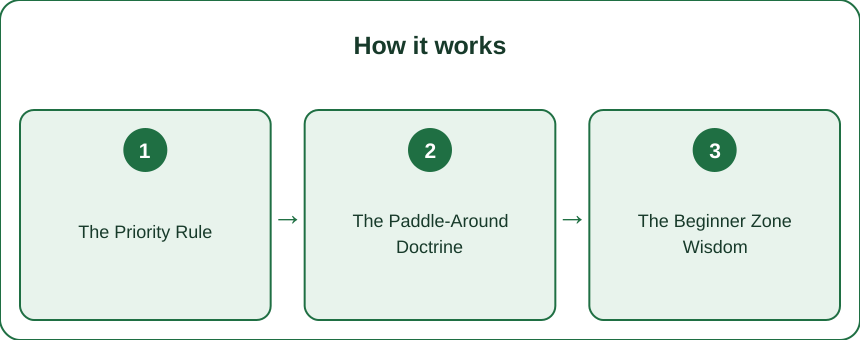
This is the foundation everything else builds on: the surfer closest to the peak — where the wave breaks first — has the wave. Paddling for a wave someone deeper already owns is called “dropping in,” and it’s the cardinal violation in surf culture. One wave, one rider, no exceptions.
When you’re genuinely unsure whether a wave is yours to take, pull back. The ocean makes more waves — there’s always another one coming, and burning trust in the lineup over one wave is a bad trade every time.
How Do You Paddle Back Out Without Getting in Someone’s Way?
Go around the break zone, not through the riding line. The wide route costs you maybe thirty seconds. The shortcut through the riding line puts you directly in a rider’s path — the exact scenario behind the collision everyone in a lineup remembers and tells stories about afterward.

If you do get caught inside anyway — it happens to everyone — hold your board, stay predictable, and let the rider steer around you as a stationary object. Panicking and moving unpredictably is what actually causes collisions, not being caught inside in the first place.
Where Should Beginners Actually Be Surfing?
The self-placement rule matters more than beginners realize. Learn at beginner-friendly breaks and the edges of the whitewater — rocking up to the experienced peak on a foam board is the etiquette equivalent of merging onto a highway at walking speed. It’s not just about fitting in; it’s a genuine safety issue for you and everyone else in the water.
The good news: beginner-friendly zones are where the patient advice actually lives anyway. Experienced surfers at a beginner break are generally happy to help; experienced surfers at an advanced peak, dealing with someone clearly out of their depth, generally aren’t.
What Are the Small Social Rules That Make a Lineup Feel Welcoming?
- The apology wave when you blow it. Immediate, cheerful, and universally accepted as currency in surf culture — mistakes happen, but owning them instantly changes how they’re received.
- Waiting your turn in the rotation. Wave-hogging is noticed and remembered, even if nobody says anything out loud in the moment.
- A nod to the locals at their break. A small gesture of respect that goes further than most beginners expect.
- Helping anyone in genuine trouble. This is the lineup’s one absolute, non-negotiable law — every other rule can bend under the right circumstances; this one never does.
Etiquette, at its core, is how strangers share a moving, shifting playing field without constant conflict. Learn it, and every lineup you paddle into gets noticeably friendlier.
Myth vs Fact: Surf Etiquette
Myth: “Lineup rules are just gatekeeping to keep beginners out.” Fact: The rules exist for safety and fairness first — beginners who learn them get welcomed in, which is the opposite of gatekeeping.
Myth: “If I get caught inside, I should paddle hard to get out of the way.” Fact: Holding your board and staying predictable is safer — a stationary object is easy to steer around, while unpredictable movement is what actually causes collisions.
Myth: “Priority just goes to whoever paddles hardest for the wave.” Fact: Priority goes to whoever is closest to the peak, regardless of paddling effort. Paddling for a wave someone deeper already owns is dropping in, not a fair contest.
Mini FAQ
Who has priority on a wave in surfing?
The surfer closest to the peak — where the wave first breaks — has priority, regardless of who paddles hardest or gets there first from farther out.
What should I do if I get caught inside while paddling out?
Hold your board and stay in place. A predictable, stationary object is easy for the rider to steer around; sudden movement is what actually causes collisions.
Where should beginner surfers practice?
At beginner-friendly breaks and the edges of the whitewater — not at the experienced peak, which is both a safety issue and a lineup etiquette violation for someone still building basic skills.
TL;DR:
- The surfer closest to the peak has priority — dropping in on their wave is the cardinal violation
- Paddle around the break zone, not through the riding line, when heading back out
- If caught inside, hold your board and stay predictable
- Learn at beginner-friendly breaks, not the experienced peak
- The apology wave, waiting your turn, and helping anyone in trouble are the social rules that make lineups welcoming
Closest to the peak owns it, paddle wide, start at beginner breaks, apologize with a smile. The unwritten rules were never gatekeeping — they were traffic law for waves, and fluency is the fastest route to welcome.
Keep Reading
This article is for general informational and styling purposes only. Fit, sizing, and product availability may vary.