Land Surfing: The Between-Session Training That Transforms Your Next Paddle-Out
Quick Answer: Train paddling with freestyle swimming, automate your pop-up with 10 daily reps on a mat, and skip counting balance boards as real surf training — single-leg strength work and actual skateboarding transfer more. Two swim sessions, daily pop-ups, and a shoulder mobility routine each week keep you ready between ocean sessions.
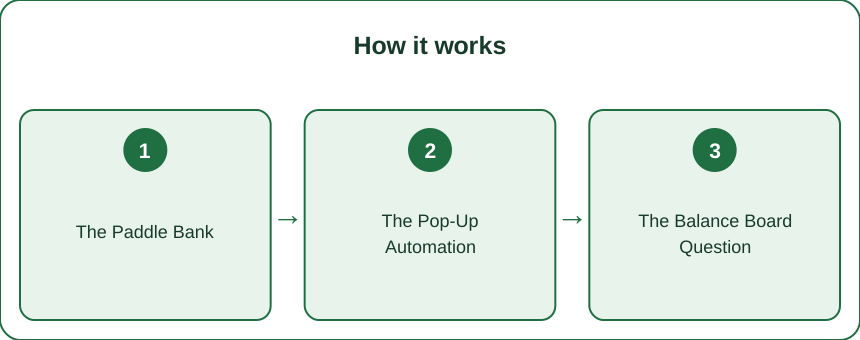
Surf progress has a cruel bottleneck: ocean time. The weeks between sessions quietly erode exactly the fitness surfing demands, so you show up to your next paddle-out feeling like you’re starting over. Land training holds that line — paddle endurance, pop-up automation, and the balance board question, actually answered. Here’s how to put the wave-starved weeks to work.
Can You Actually Train Paddling Without Being in the Ocean?
Yes — surfing is mostly paddling, and paddling is genuinely trainable on dry land, or at least in a pool:
- Swim sessions are the closest transfer available. Freestyle endurance is paddle endurance — the muscles, the rhythm, and the cardiovascular demand overlap heavily.
- Resistance-band swim-stroke pulls work as a hotel-room or no-pool version, mimicking the same pulling pattern when a pool isn’t available.
- Prone back-extension holds train the paddler’s arched posture directly — this is the low-back endurance every single session taxes, and it’s rarely trained on its own outside of a deliberate routine.
How Do You Automate a Pop-Up Without a Wave?
The pop-up is fundamentally a motor pattern, which means it’s trainable on land the same way any reflex is — through repetition. Ten daily pop-ups on a mat (chest-down to surf stance, no knees touching the ground, landing soft and centered) builds this pattern outside the water, where you have unlimited reps and zero time pressure.
Progress from slow, deliberate reps to fast ones. The actual goal is reflex — a wave offers no thinking time once it’s under you, but your living room offers unlimited reps to build that automatic response before you ever need it in the water.
One tip that catches almost every beginner off guard: film yourself. It reliably reveals the trailing-foot drag that nearly every beginner carries without realizing it — a habit that’s nearly invisible from the inside but obvious on video.

Are Balance Boards Actually Useful for Surf Training?
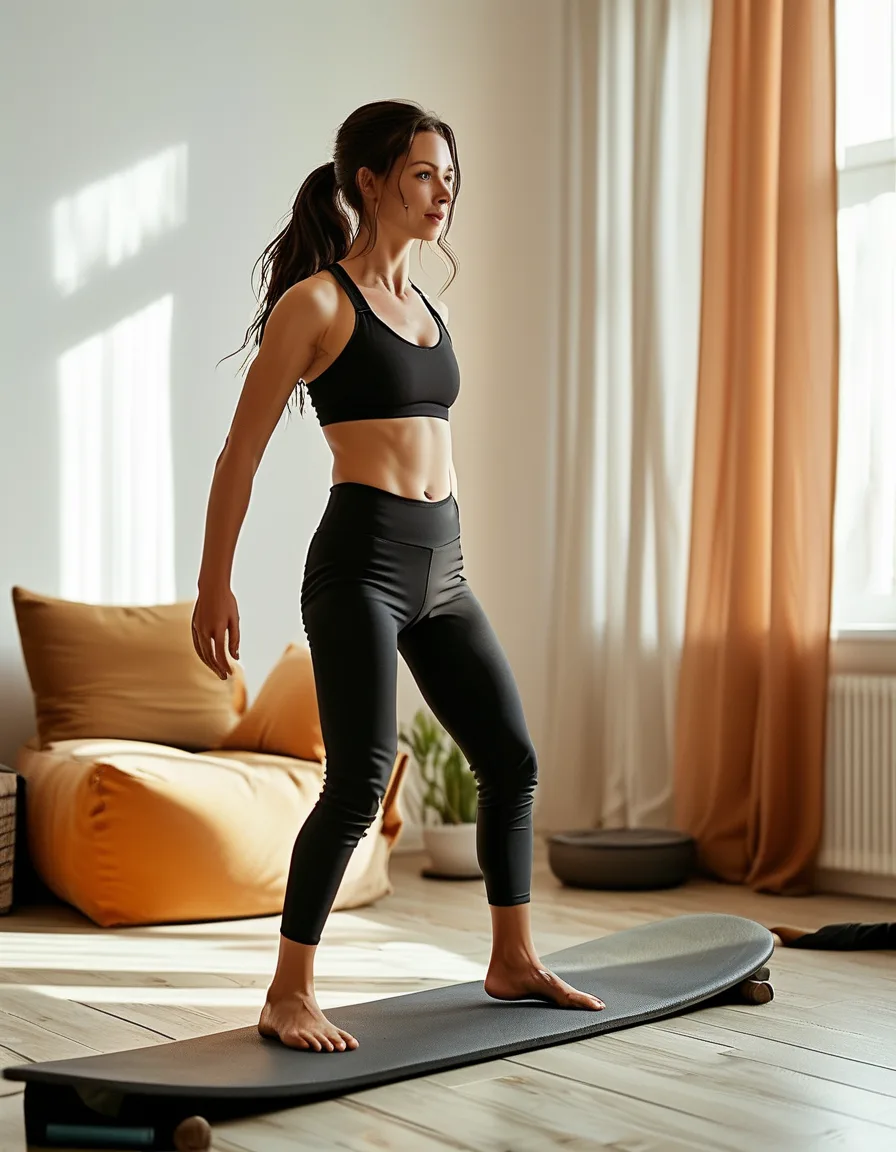
The honest verdict: balance boards train balance-board skill, with only partial transfer to actual surfing. They’re fun, they strengthen your ankles, and they’re better than nothing — but that’s a lower bar than most people assume when they buy one specifically “for surfing.”
Single-leg strength work — step-downs, single-leg balance drills — and actual skateboarding, which is the closest land cousin to surfing’s balance demands, transfer noticeably more. Own a balance board for the fun of it if you enjoy it, just don’t count the time on it as equivalent to real surf-specific training.
What Does a Realistic Between-Trip Training Week Look Like?
A sustainable weekly maintenance routine:
- Two swim-or-band paddle sessions per week
- Daily pop-ups — just two minutes is enough to keep the motor pattern sharp
- Squats and single-leg work for the drive off the board — the explosive power behind a strong pop-up and turns
- A shoulder mobility routine — paddle shoulders need overhead range that a desk job steals from you all week without you noticing
The payoff shows up fast and unambiguously: your next session’s first paddle-out reports the difference immediately. The ocean genuinely respects homework — you can feel the difference in your first ten minutes back in the water.
What Nobody Tells You About Training for Surfing on Land
Most people assume surf fitness means generic cardio or a gym membership. In practice, the highest-leverage land training is oddly specific — pop-up reps on a mat and freestyle swimming laps look nothing like surfing from the outside, but they’re training almost exactly the muscle patterns and endurance surfing actually demands. Generic fitness helps a little; specific fitness helps a lot.
Mini FAQ
What’s the best land exercise for paddle endurance?
Freestyle swimming — it’s the closest transfer available, using nearly the same muscles and rhythm as ocean paddling.
How many pop-ups should I practice per day?
About ten daily reps on a mat is enough to build and maintain the motor pattern, progressing from slow, deliberate reps to fast ones over time.
Are balance boards worth using for surf training?
They offer partial transfer and are genuinely fun, but single-leg strength work and actual skateboarding train surf-specific balance more effectively.
TL;DR:
- Freestyle swimming is the closest land-based transfer to paddle endurance
- Automate your pop-up with 10 daily reps on a mat, slow progressing to fast
- Film your pop-up to catch trailing-foot drag most beginners don’t notice
- Balance boards are fun but only partially transfer — single-leg work and skateboarding transfer more
- A realistic weekly routine: two swim sessions, daily pop-ups, squats/single-leg work, and shoulder mobility
Swim the paddling, automate the pop-up, balance-board for fun not credit. The ocean controls the sessions — the land controls whether you arrive ready, and ready is trainable in a living room.
Keep Reading
This article is for general informational and styling purposes only. Fit, sizing, and product availability may vary.