Why Your Pop-Up Works Perfectly on the Beach But Fails in the Water
Quick Answer: Beach pop-up practice happens on a completely still, predictable surface with unlimited time. A real wave adds motion, instability, and a hard time limit — all at once — which is a fundamentally different task your beach reps never actually trained for. The fix is practicing pop-ups under artificial time pressure and instability, not just repeating clean beach reps.
A perfect beach pop-up proves you know the movement pattern. It doesn’t prove you can execute that pattern while the surface under you is actively moving and you have under a second to decide.
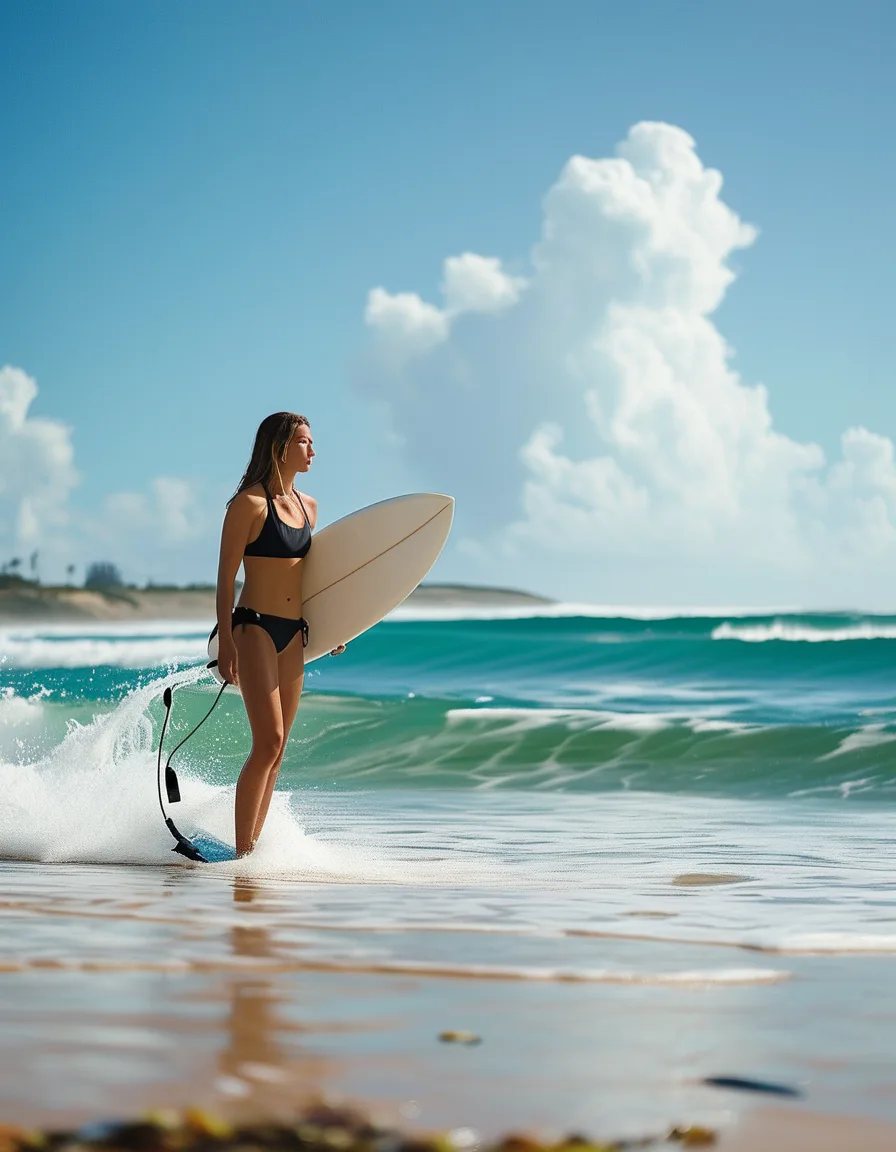
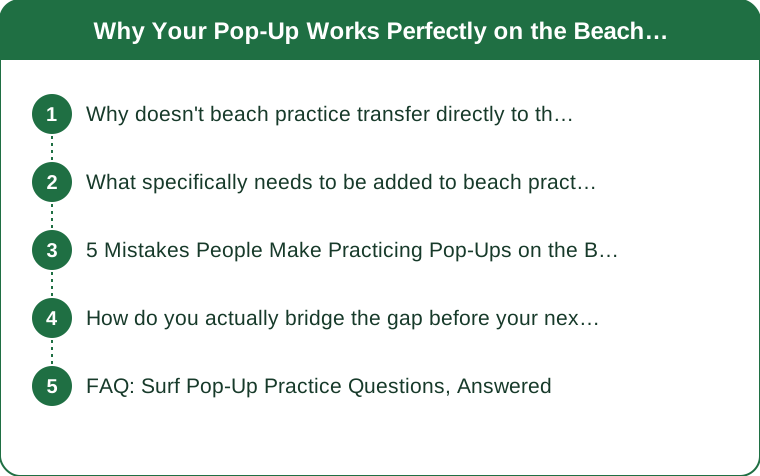
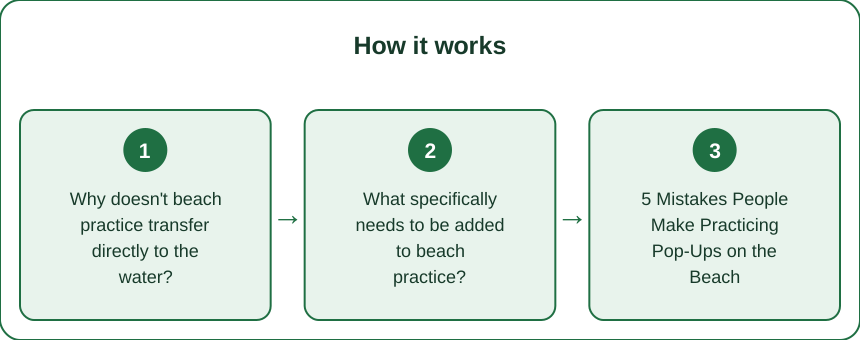
Why doesn’t beach practice transfer directly to the water?
Beach pop-ups train on a static, flat, infinitely patient surface — you can take three seconds, adjust your hands, and pop up whenever you’re ready. A real wave gives you a narrow window, usually under a second, on a moving, tilting surface that’s actively trying to throw off your balance mid-motion.
These are different skills wearing the same name. Beach practice builds the motor pattern; water practice builds the timing and balance-under-instability that the pattern actually needs to survive contact with a real wave.
What specifically needs to be added to beach practice?
Time pressure and instability, deliberately. Practice pop-ups with a countdown — someone calling ‘go’ unpredictably, or a phone timer forcing you to pop up within one second of a random cue — to simulate the decision speed a wave demands.
For instability, practicing on a soft, unstable surface (a folded towel, a balance pad, or an inflatable trainer) forces your stabilizers to work the way they will on a moving board, which flat sand simply doesn’t.
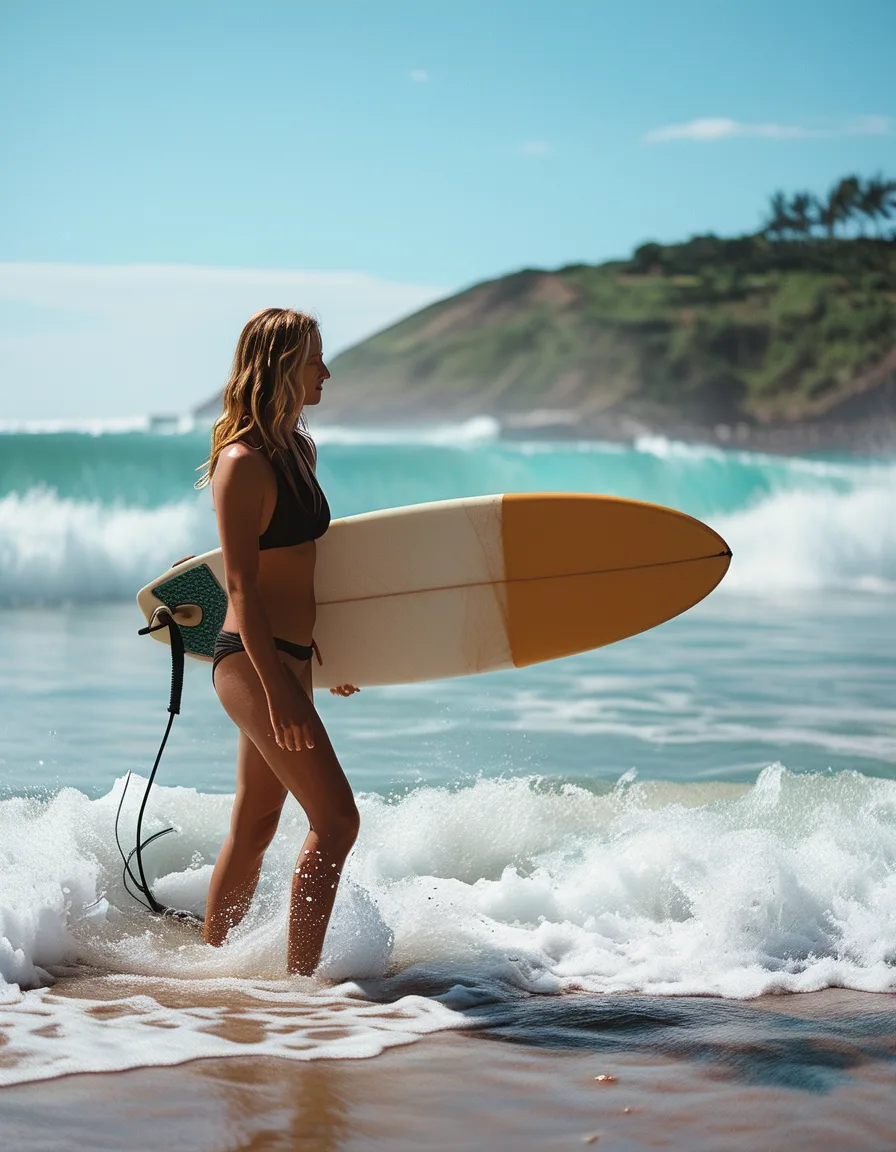
5 Mistakes People Make Practicing Pop-Ups on the Beach
1. Taking too much time per rep. If you can pause mid-pop-up on the beach, you’re training a different movement than the water requires.
2. Never adding a stability challenge. Flat sand pop-ups don’t touch the balance component that actually breaks down on water.
3. Practicing without watching your foot placement land correctly. Sloppy foot placement on sand becomes catastrophic on a moving board — dial this in slow before adding speed.
4. Skipping the paddle-into-pop-up transition. Isolated pop-ups miss the arm-fatigue and momentum-shift context of actually paddling into a wave first.
5. Assuming more beach reps alone will fix water performance. Past a certain volume, more static reps show diminishing returns — the water-specific variables need direct training.
How do you actually bridge the gap before your next surf session?
Combine all three missing elements in one drill: paddle in place (or on a skateboard/balance trainer) for 15-20 seconds to fatigue your arms slightly, then pop up on a cue within one second, on an unstable surface. This single drill approximates the real sequence — paddle fatigue, sudden timing, and instability — far better than isolated clean beach reps.
Do this 10-15 times per practice session, prioritizing the sequence and speed over picture-perfect form once the basic movement pattern is already solid.
FAQ: Surf Pop-Up Practice Questions, Answered
Is beach practice still worth doing at all?
Yes — it’s essential for building the basic movement pattern and correct foot placement before adding the harder variables. Skip it and you’re troubleshooting form and timing simultaneously, which is much harder.
How many real wave attempts does it usually take before pop-ups start clicking?
Highly variable, but many beginners report a noticeable shift within 8-10 real wave sessions once beach practice has already included time pressure and instability training.
Should I use a balance board or trainer even if I don’t have consistent beach access?
Yes — a balance trainer at home can substitute for some in-water repetition, specifically for the instability component, though it doesn’t replace real wave timing practice entirely.
TL;DR:
- Beach pop-ups train the movement pattern on a static surface with unlimited time — water demands both speed and instability tolerance
- Add a countdown cue and an unstable surface (towel, balance pad) to beach practice specifically
- Combine paddle fatigue with a sudden pop-up cue to simulate the real wave sequence
- Beach practice still matters for foundational form — it’s just not sufficient alone
Add the time pressure and instability your beach reps have been skipping, and the water starts looking a lot more like your practice sessions.
Keep Reading
This article is for general informational and styling purposes only. Fit, sizing, and product availability may vary.