Reading Waves: The Surf Forecasting and Wave-Selection Skills That Beat Better Surfers
Quick Answer: The surfer who catches the most waves isn’t usually the fittest — she reads swell period (10+ seconds means organized power), checks wind and tide before leaving home, watches the lineup for 15 minutes before paddling out, and follows the peeling shoulder while declining closeouts. Wave knowledge compounds faster than fitness ever will.
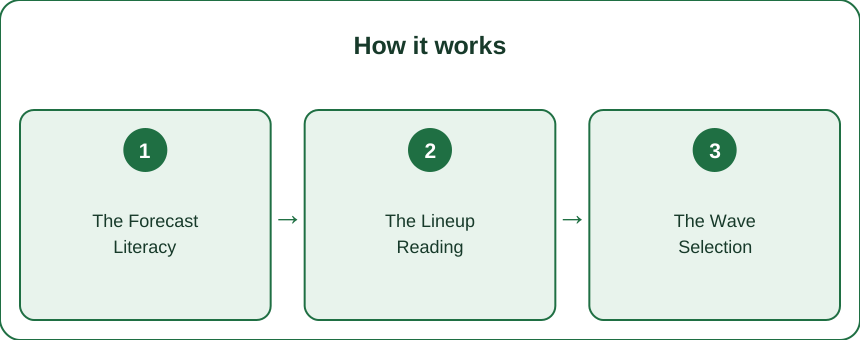
The surfer who catches the most waves usually isn’t the fittest one out there — she’s the one who reads the ocean best, at three different ranges: the forecast before leaving home, the lineup patterns from the beach, and the wave’s actual shape in the final seconds before paddling. Here’s the wave-reading guide.

What Should You Actually Check Before Driving to the Beach?
Learn to read swell period, not just height. Period is the underrated number in most surf forecasts — long-period swells carry dramatically more power per foot than short-period ones. Anything in the 10-second-plus range generally means organized, well-formed waves; shorter periods often mean choppy, disorganized surf even at the same reported height.
Understand wind timing. Offshore wind grooms waves into clean faces; onshore wind crumbles them fast. Morning calm is usually your advantage — light-wind windows, often early, are genuine beginner gold before the afternoon wind picks up.
Factor in tide. Every spot has a tide preference, and getting it wrong matters — too low often means the wave dumps hard, too high often means it goes mushy and weak at many beaches. This is exactly the kind of local knowledge that shortcuts years of trial and error if you can find someone who knows the spot.
Target beginner-friendly conditions specifically. Aim for 2-3 feet, a longer period, and light wind. Small and clean reliably beats big and messy — always, no exceptions, no matter how tempting a bigger swell looks in the forecast. And if it’s flat, that’s not a wasted day — it’s a legitimate paddle-practice opportunity.
Read forecast apps for exactly three numbers. The swell-wind-tide triangle is what actually matters — everything else in a forecast app is secondary. Do a cam check right before you drive if the spot has one; conditions can shift between the forecast and reality.
Stay flexible about getting skunked. Forecasts are probabilistic, not guaranteed. Have a backup spot in mind, and be genuinely okay with a no-surf day now and then — flexibility here saves a lot of frustration.

How Do You Read the Lineup Once You’re at the Beach?
Watch for fifteen minutes before paddling out. This pre-paddle observation is the single best investment of your session — time the sets, map the peaks, find the channel. Skipping this step is the single most common beginner mistake, and it costs far more time than it saves.
Learn to recognize set patterns. Waves arrive in groups, not evenly spaced — counting the set-and-lull rhythm tells you when waves are coming and when they aren’t. The lull between sets is your actual paddle-out window.
Identify the peak. This is the wave’s first-breaking point — where rides start, and where lineup priority lives. Beaches with shifting peaks require re-reading throughout a session, not just once.
Map currents and rips. Rip channels show up as darker, calmer, seaward-moving water. Learn the dual literacy here: a rip is the surfer’s escalator out past the break, but a serious hazard for a swimmer caught unaware. This distinction matters — treat rip current safety seriously, and if you’re new to a spot, surf near a lifeguard tower and ask locals about known hazards before paddling out alone.
Read the crowd. Assess the lineup’s skill level and vibe — find the beginner-friendly corner and avoid the crowded, competitive peak until you’re more confident.
Plan your exit before you paddle out. Map the way back in and note safe-landing zones before you’re out there — figuring this out mid-session, tired, is a much worse time to solve it.
How Do You Actually Choose the Right Wave in the Moment?
Read the shape in the final seconds. Assess the wave’s shoulder — a peeling wave with an open face is rideable; a closeout’s all-at-once wall isn’t. Follow the peel, not the wall.
Judge the steepness. There’s a real catchable window — too fat and the wave just rolls under you, too steep and it pitches you over the falls. Adjust your position with your paddling, not after you’re already committed.
Commit or release — never half-commit. A half-hearted paddle is the worst option on the table. Full commitment or a clean release; hesitation wipeouts outnumber committed ones by a wide margin.
Prioritize quality over quantity. Two genuinely good waves beat ten closeouts. Your paddling energy is a real budget — spend it on the waves actually worth catching.
Treat the lull as active reading, not idle floating. Hold your position, keep watching the sets. Patience here is a skill, not a passive default.
Learn to decline closeouts. Identifying and skipping closeouts is what separates progressing surfers from stuck ones — a steady diet of closeouts is a genuine progress killer for beginners.
What Nobody Tells You About Wave Reading
Most beginners assume better surfing comes from better paddling fitness or a better board. In practice, wave knowledge compounds faster than fitness does — a surfer who reads period, timing, and shape well will out-catch a fitter surfer who paddles for every wave indiscriminately. The best surfer in the water is, quietly, almost always the best reader of it.
Mini FAQ
What’s the most important number in a surf forecast?
Swell period, not height. A longer period (10+ seconds) means organized, powerful waves; a shorter period often means choppy, weaker surf even at a similar reported height.
How long should I watch the lineup before paddling out?
About fifteen minutes. This lets you time the sets, spot the peak, and find the channel — skipping this step is one of the most common mistakes beginners make.
How do I tell a rip current from a normal channel?
Look for darker, calmer, seaward-moving water. Rips can actually help surfers paddle out faster, but they’re a real hazard for swimmers — always respect ocean safety and stay near a lifeguard when you’re new to a spot.
TL;DR:
- Read swell period, not just height — 10+ seconds means organized power
- Check wind (offshore grooms, onshore crumbles) and tide before you drive
- Watch the lineup for fifteen minutes before paddling out
- Follow the peeling shoulder, decline closeouts, and commit fully or release cleanly
- Wave knowledge compounds faster than fitness — reading beats raw paddling power
Wave knowledge beats fitness: read the swell PERIOD (10+ seconds means organized power), hunt light-wind mornings, and target 2-3 foot clean days. Watch the beach fifteen minutes before paddling — time the sets, map the peaks and rips, find the channel — then in the water, follow the peeling shoulder and decline the closeouts.
Keep Reading
This article is for general informational and styling purposes only. Fit, sizing, and product availability may vary.